


Inauguration of the integrated water protection project in the Rimini area
On Thursday, August 5 at 11:30 a.m., the उद्घurational event of Petroltecnica’s pilot project will take place at the Marecchia diversion channel, right bank, 100 meters from the Via Coletti transit bridge, upstream direction, in the presence of the Regional Councillor for the Environment of Emilia-Romagna, IRENE PRIOLO, Dr. Cristina GOVONI from the Region, the Councillor for the Environment of the Municipality of Rimini, Anna MONTINI, and the Environmental Emergency Response team of Petroltecnica.
A very important project, representing a sort of “closing the loop” that brings together all the initiatives carried out in recent years by the municipal administration with the fishing sector and beach businesses, both to reduce the presence of waste in the sea—especially plastic—and to encourage fishermen to bring waste back to shore.
Acting on rivers represents the connecting element within a broader strategy to reduce plastic use, aimed at combating marine litter. It also raises awareness among those living inland or who do not frequent beaches about the use of plastic items—especially single-use—and their proper disposal once they become waste. Rivers are in fact the main contributors to the majority of floating waste found at sea, carrying large quantities of debris into the marine environment through their currents. International statistics estimate that around 80% of marine waste originates from rivers; although more evident in developing countries, this phenomenon unfortunately also affects rivers in Western nations.
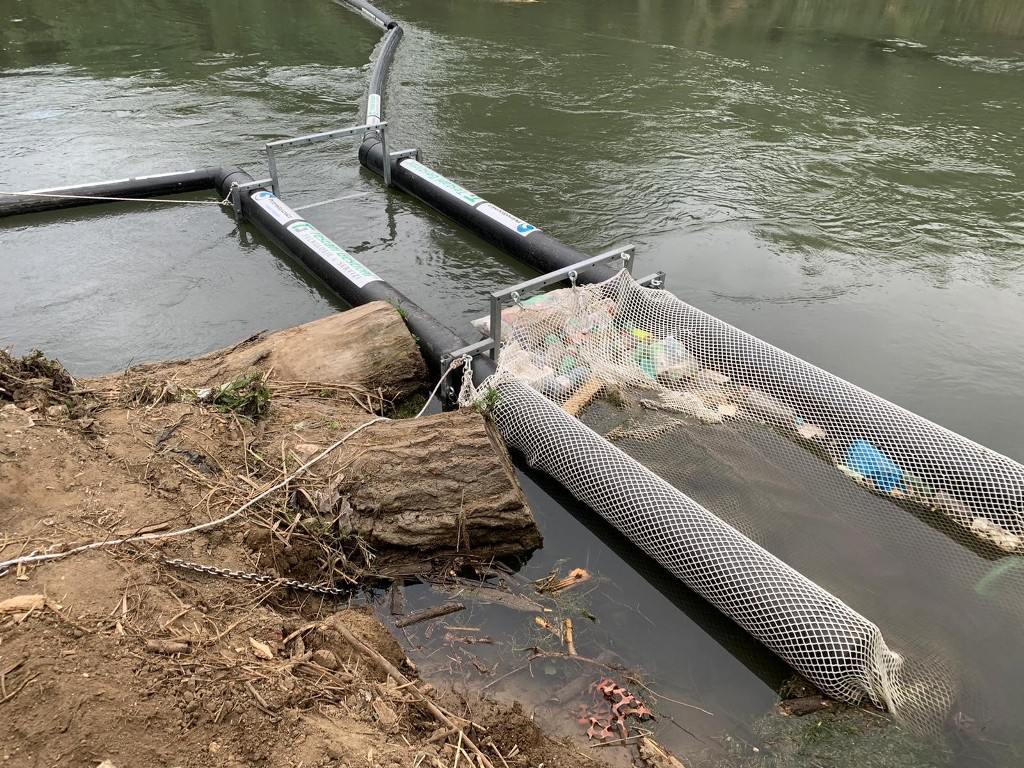
For this reason, the Municipality of Rimini, also with financial support from the Emilia-Romagna Region, has welcomed and strongly supported the experimental project proposed by Petroltecnica for the installation of floating barriers to collect plastic waste on the Marecchia River.
Petroltecnica is a company based in the province of Rimini that has been operating nationwide for 50 years in environmental services. Through this initiative, it reaffirms its commitment to protecting marine and river habitats by preventing pollution of our sea, which represents life as well as an economic and environmental resource for the territory. After developing the “No Man Entry” patents aimed at minimizing risks to operators working in confined spaces, Petroltecnica is now also engaged in Research & Development in the fields of environment and land management.
“Plastic-catching” barriers, also developed by Petroltecnica, have already been successfully installed—on behalf of the Lazio Region—on the Tiber and Aniene rivers, and were inaugurated in Rome in June 2020 in the presence of top regional authorities. These systems exploit the natural current to channel floating plastic waste into a confined section (“trap”), where it is contained and stored. The collected plastics are then safely recovered manually from the riverbank, packaged in suitable containers, labeled, and sent to designated treatment facilities.
This initiative is part of the actions promoted by the Emilia-Romagna Region under the regional strategy “#Plastic-freER” aimed at reducing the impact of plastics on the environment. The strategy involves representatives from across regional society through a steering committee supporting the regional government. In particular, the interception of plastic waste in rivers and seas is one of the 15 actions included in the strategy, which is why this project receives regional support.
The barrier project is complemented by a second initiative, forming an integrated water protection project in the Rimini area. This consists of another type of small floating barriers capable of capturing smaller floating waste (such as cigarette butts) and hydrocarbons present in more enclosed water bodies, especially in port areas. This is the I CATSORB system (“I capture and absorb”), an internationally patented solution. Thanks to the patronage of the Municipality of Rimini, it is being installed for the first time in Italy and worldwide in the basin of the Tiberius Bridge, adjacent to the floating pedestrian walkway, with the specific aim of protecting this valuable natural, historical, and cultural area along the canal connecting Parco XXV Aprile to the harbor canal. I CATSORB autonomously blocks and contains floating waste, microplastics, hydrocarbons from the harbor and boats, as well as traces of detergents.
The Municipality of Rimini and the Emilia-Romagna Region have strongly supported this integrated project, fully aware that the hydrographic network is one of the main pathways through which plastics from inland areas reach the sea. Through streams and rivers, these materials eventually reach the marine environment where, through a complex but inevitable degradation process, they turn into microplastics, causing severe impacts on marine ecosystems and on food derived from the sea and oceans.